Research
The station conducts cow-calf research emphasizing forage utilization
and breeding efficiency; fire and air-cured dark and burley tobacco breeding,
management, and curing.
New research projects in tobacco include trickle irrigation and nitrogen
management in dark-fired and burley tobacco. The combination of environment
and soil properties in this region produces dark tobacco that has not
been equaled in any region of the world.
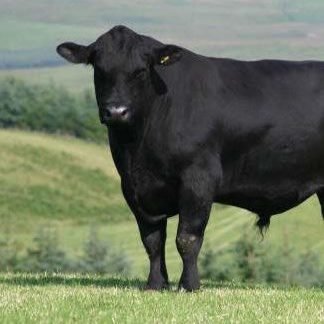
Current beef cattle research is involved in investigating the effects
of poor nutritional management on the establishment of pregnancy in mature
cows. Other areas of beef cattle research include determining effects
of endophyte-infected tall fescue on male reproduction function, steer
development and grass sustainability. Collaborative experiments studying
different variations of creep feeding are also being performed in beef
calves.
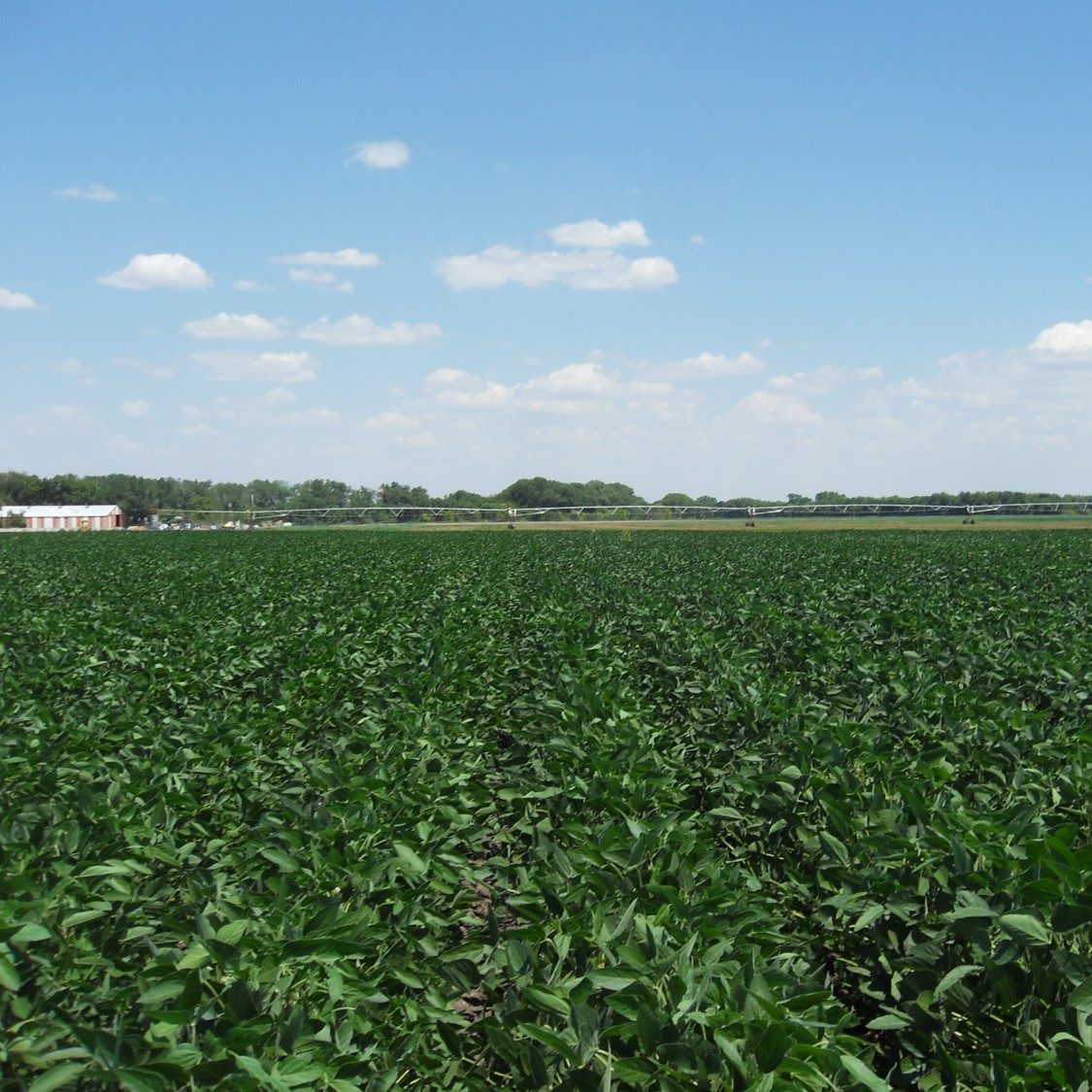
The soybean breeding program at the station holds the mission to increase
the productivity of Tennessee agriculture through genetic improvement
of the soybean. Additional agronomic research includes improving production
efficiency in viable crops for the Highland Rim area. Other research studies
include providing production systems for alternative crops that are adaptable
to the Highland Rim area.
Research Project Leaders & Projects
Agricultural and Biosystems Engineering
Dr. John Buchanan, Extension Specialist
Tobacco irrigation project to determine the efficiency of trickle irrigation
for maximizing yield and quality of burley and dark fire-cured tobacco.
Mr. Jim Wills, Professor
Evaluation of Rabbiteye and Highbush Blueberries utilizing raised beds
and trickle irrigation.
Agricultural Economics
Dr. Darrell S. Mundy, Professor
Economic evaluation of different production management schemes applied
to dark - fired tobacco and low cost curing of dark fire-cured tobacco.
Animal Science
Dr. Warren Gill, Professor
Effects of Southeast Pride Blue Tag cattle health and management program
on performance of feeder calves.
Dr. Fred Hopkins, Professor
Investigation of pastures of tall fescue cultivars with different endophytes
and/or clover for intact beef males and steers. To compare the effects
of KY 31 E+ tall fescue with or without clover, Jesup tall fescue with
or without a novel endophyte on the performance of intact beef males and
steers.
Dr. James Neel, Professor
Effects of Southeast Pride Blue Tag cattle health and management program
on performance of feeder calves.
Dr. Neal Schrick, Associate Professor
Understanding nutritional effects on bovine reproductive performance.
Objectives are to determine the effects of nutritional restriction on
pregnancy rates of cycling beef cows.
Investigation of pastures of tall fescue cultivars with different endophytes
and/or clover for intact beef males and steers. To compare the effects
of KY 31 E+ tall fescue with or without clover, Jesup tall fescue with
or without a novel endophyte on the performance of intact beef males and
steers.
Collaborative experiments studying different variations of creep feeding
are also being performed in beef calves.
Dr. John Waller, Associate Professor
Evaluation of tall fescue cultivars with different endophytes and other
potentially promising forages in small plots under grazing. Objectives
are to evaluate under grazing the long-term persistence of selected tall
fescue cultivars containing wild and novel endophytes, and to determine
the risks involved in potential escape or dominance of the novel endophytes,
and to evaluate the adaptation of a few other potentially promising orchard
grasses and clovers.
Investigation of pastures of tall fescue cultivars with different endophytes
and/or clover for intact beef males and steers. To compare the effects
of KY 31 E+ tall fescue with or without clover, Jesup tall fescue with
or without a novel endophyte on the performance of intact beef males and
steers.
Entomology & Plant
Pathology
Dr. Steve Bost, Professor
Projects include management of Terrazole fungicide in tobacco float beds
and pythium management in cantaloupes.
Dr. Bonnie Ownley, Associate Professor
Research involves growth promotion and yield of tobacco with plant-growth
promoting rhizobacteria (PGPR) and the effects of Bacillus spp. on growth
of tobacco and biological control of target spot and soreshin of tobacco.
Mr. Bill Shamiyeh, Sr. Research Associate
Experiments involve evaluation of insect and disease management tools
in tobacco float beds and in the field.
Forestry, Wildlife & Fisheries
Craig Harper, Assistant Professor
Comparing the establishment of native warm season grasses in a conventional
and no-till culture with and without Plateau herbicide.
Dr. Tom Hill, Professor
Major interests in management of balanced fish populations in farm ponds
and aquaculture.
Dr. Larry Wilson, Professor
Major interests are in fisheries management and aquaculture.
Plant Sciences
Dr. Gary Bates, Associate Professor
Comparing the establishment of native warm season grasses in a conventional
and no-till culture with and without Plateau herbicide.
Evaluation of tall fescue cultivars with different endophytes and other
potentially promising forages in small plots under grazing. Objectives
are to evaluate under grazing the long-term persistence of selected tall
fescue cultivars containing wild and novel endophytes, and to determine
the risks involved in potential escape or dominance of the novel endophytes,
and to evaluate the adaptation of a few other potentially promising orchard
grasses and clovers.
Investigation of pastures of tall fescue cultivars with different endophytes
and/or clover for intact beef males and steers. To compare the effects
of KY 31 E+ tall fescue with or without clover, Jesup tall fescue with
or without a novel endophyte on the performance of intact beef males and
steers.
Dr. Greg Breeden, Extension Assistant
Weed control investigations in no-till and conventional till dark-fire
cured tobacco.
Dr. Lloyd Callahan, Professor
Cool and warm season turfgrass cultivar evaluations.
Dr. Bob Conger, Professor
Switchgrass variety trials: To compare yield of three Tennessee experimental
synthetics, derived form 2, 4, and 20 clones, with other commercially
grown cultivars.
Orchard grass variety test: To compare two Tennessee experimental orchard
grass synthetics with other cultivars adapted to Tennessee.
Fall fescue variety trials.
Dr. Paul Denton, Professor
Conservation tillage tobacco production, comparing no-till and strip-tilled
transplanted tobacco to conventional tillage burley and dark-fire cured
tobacco.
Dr. Don Fowlkes, Professor
Conservation tillage tobacco production, comparing no-till and strip-tilled
transplanted tobacco to conventional tillage burley and dark-fire cured
tobacco.
Preplant nitrogen rate interaction with foliar fertilization of tobacco.
Objectives are to determine the efficiency of foliar fertilization for
maximizing yield and quality of burley and dark fire-cured tobacco.
Dr. Henry Fribourg, Professor
Evaluation of tall fescue cultivars with different endophytes and other
potentially promising forages in small plots under grazing. Objectives
are to evaluate under grazing the long-term persistence of selected tall
fescue cultivars containing wild and novel endophytes, and to determine
the risks involved in potential escape or dominance of the novel endophytes,
and to evaluate the adaptation of a few other potentially promising orchard
grasses and clovers.
Investigation of pastures of tall fescue cultivars with different endophytes
and/or clover for intact beef males and steers. To compare the effects
of KY 31 E+ tall fescue with or without clover, Jesup tall fescue with
or without a novel endophyte on the performance of intact beef males and
steers.
Dr. Charles Graves, Professor
Soybean variety tests for maturity groups IV and V.
Medium season corn hybrid test, series 500 and 600.
Small grain (wheat, barley, and oats) variety trials.
Forage variety trials; fescue, orchard grass, and ryegrass variety trials.
Alfalfa and red clover variety trials.
Gammagrass nitrogen study.
Comparing the establishment of native warm season grasses in a conventional
and no-till culture with and without Plateau herbicide.
Dr. Bob Miller, Professor
Dark Fire Cured and burley breeding lines and variety trials. These experiments
include early and advance breeding lines as well as on farm variety test.
The objectives of these trials are to improve profitability through improved
disease resistance and higher yields.
Tobacco irrigation project to determine the efficiency of trickle irrigation
for maximizing yield and quality of burley and dark fire-cured tobacco.
Preplant nitrogen rate interaction with foliar fertilization of tobacco.
Objectives are to determine the efficiency of foliar fertilization for
maximizing yield and quality of burley and dark fire-cured tobacco.
Preplant nitrogen rate interaction with foliar fertilization of tobacco.
Objectives are to determine the efficiency of foliar fertilization for
maximizing yield and quality of burley and dark fire-cured tobacco.
Dr. Thomas Mueller, Associate Professor
Cover crop management and weed control in no-till tobacco.
Dr. Charles Mullins, Professor
Pumpkin and watermelon variety evaluations.
Dr. Vincent Pantalone, Assistant Professor
Soybean small-seeded advanced yield trial. The objective is to evaluate
yield, protein, and other agronomic characteristics of small-seeded Tennessee
experimental soybean lines for Natto production.
Soybean elite yield trials and Intermediate yield trials of Tennessee
Experimental pure lines. To evaluate yield and other agronomic characteristics
of newly developed Tennessee experimental soybean pure lines.
QTL discovery for soybean isoflavones and agronomic traits. To identify
OTLs for soybean isoflavones, protein, oil, and agronomic traits in a
highly inbred population of Essex x Williams F6-derived lines.
Low saturated-fat soybean heritability and genotypic correlations among
agronomic and seed quality traits. The objectives are two fold. The first
objective is to estimate genetic variances, heritability, and genotypic
correlations between low palmitic, low linolenic soybean and agronomic
and seed quality traits and the second objective is to identify superior
new agronomic and SCN-resistant lines with desirable fatty acid oil quality
as selections for further development.
Intermediate yield trial of MG VI low-saturated-fat, advanced Tennessee
Experimental pure lines. The objective is to evaluate whether newly developed,
low-saturated fat soybean lines provide high yield and other desirable
agronomic characteristics in production regions of Tennessee.
Dr. Neil Rhodes, Professor & Department Head
Weed control investigations in no-till and conventional till dark-fire
cured tobacco. Primarily investigating Spartan / Command / Devrinol herbicide
programs with burndown herbicides in no-till transplanted tobacco.
Dr. Dennis West, Professor
Wheat yield trials with experimental varieties.
|